

Service Overview
We design and test biomechanical models using cadaveric and animal specimens integrated with your medical device that provide real physiological test results. Biomechanical studies are commonly performed on sports medicine devices and sacroiliac joint implants where interaction with biological tissue is an integral part of the device’s ability to function. Tests can evaluate range of motion, implant/tissue interaction, implant stability, or customized objectives.
All biomechanical testing projects are designed with custom protocols in mind, meeting the requirements of your study goals.
What biological tissues can be used for biomechanical testing?
Animal and cadaveric specimens/tissues are custom ordered specific to the testing protocol. We arrange sourcing, storing, and preparation of the desired tissues. Test preparation and procedures are done safely in our biohazardous laboratory equipped with surgical instruments and a sterilization unit next to our test lab.
What equipment do you use for testing?
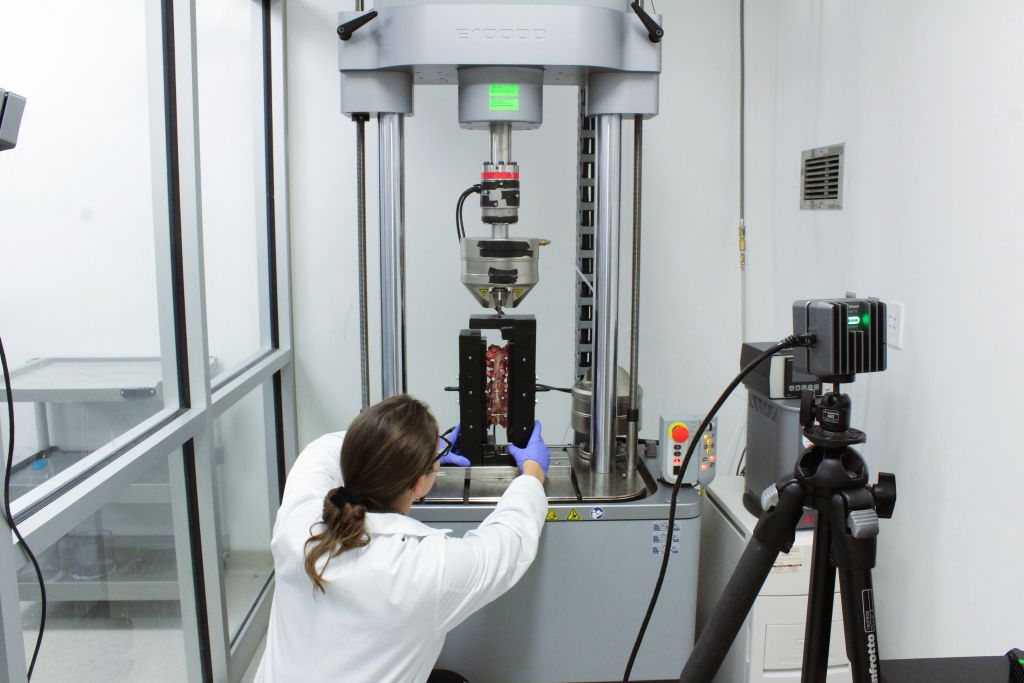
Static and dynamic testing may be performed on our load frame equipment up to a maximum force of +/-10kN or +/-100Nm. Common tests include static load-to-failure to measure maximum implant strength, and cyclic testing to measure implant endurance and stability.
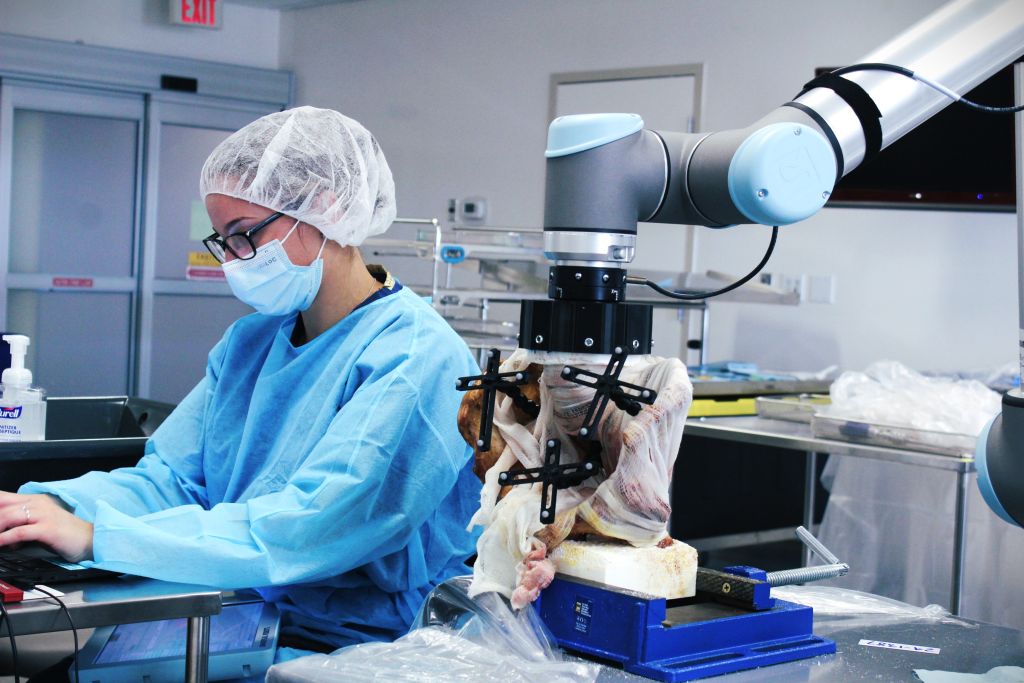
Range-of-motion (ROM) analysis is commonly performed at the sacroiliac joint (SIJ) on a lumbosacral pelvis model to measure joint stability when implanted with a SIJ device. Optical motion tracking is used in combination with a 6-axis robotic arm to control and record relative motion at the joint of interest. Joint movement can be applied in flexion-extension, lateral bending, and axial rotation. Cyclic testing is performed to mimic repeated joint motion and evaluate implant stability.
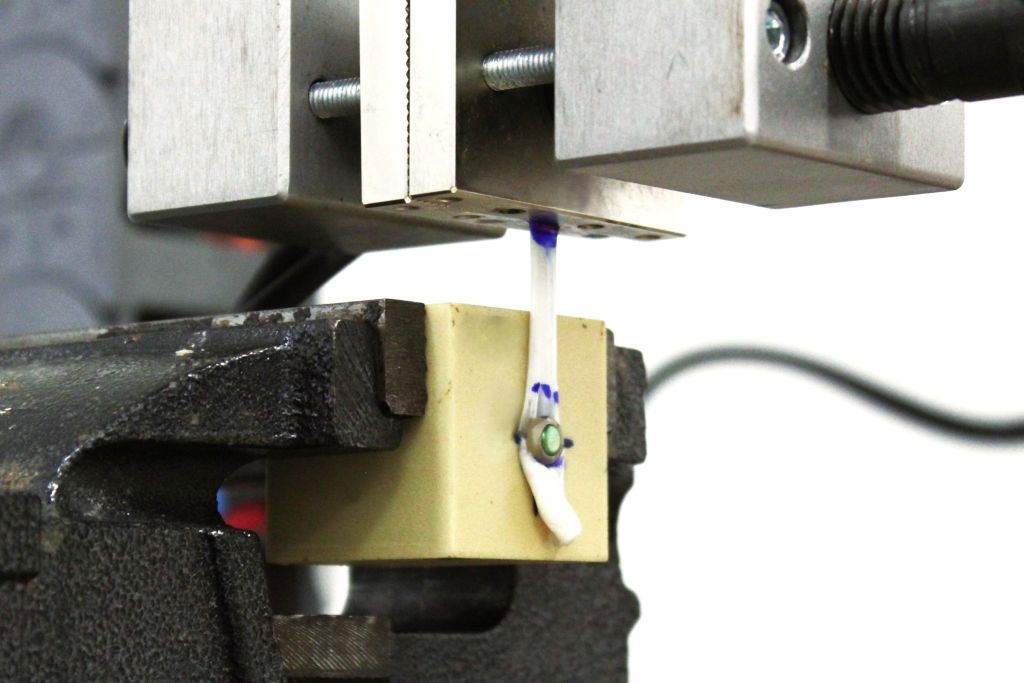
We also perform biomechanical pin-on-disc testing using methods adapted from ASTM F732 using biological tissue counterparts such as bone or cartilage for joint devices intended to articulate with natural tissue.
What are the most common types of medical devices used in biomechanical testing?
Biomechanical testing is often requested for medical devices intended to articulate or interact with biological tissue in order to function. Common examples include sacroiliac joint devices, suture anchors and interference screws in sports medicine, cartilage replacement devices, and novel designs where tissue interaction is critical.
Why is biomechanical testing important?
Biomechanical testing using animal or cadaveric specimens provide valuable data to determine device usability, safety, and performance in a physiological model. Whereas, standard mechanical test methods solely rely on the mechanical behaviour of the device which are often tested to failure. Biomechanical testing bridges the gap between bench-top testing and clinical evaluation.